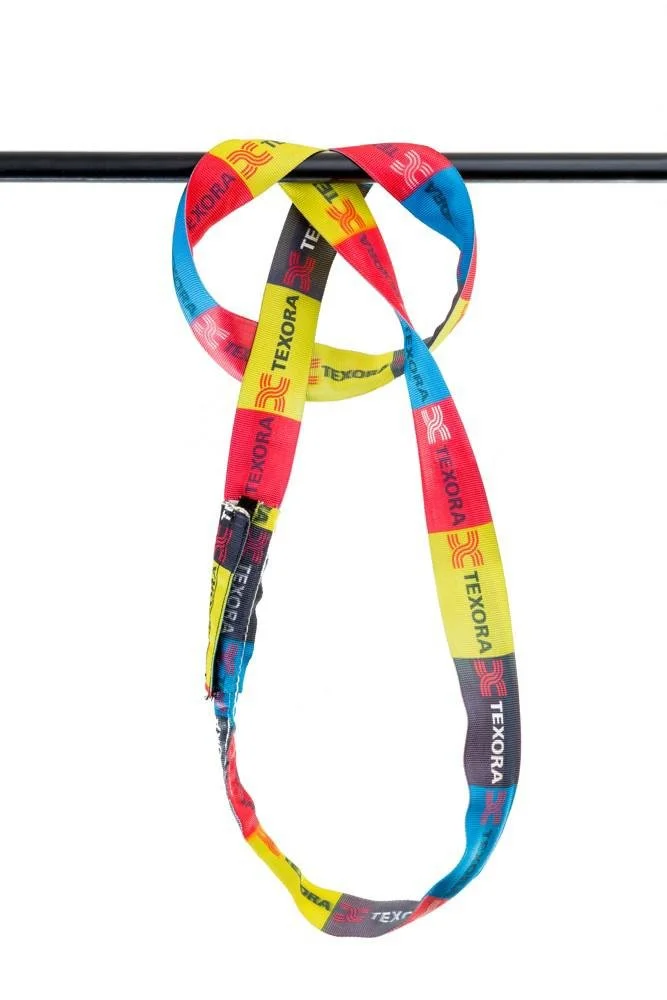
This anchoring device is constructed with a load-bearing core of wound steel wire ropes encased in an outer protective sheath that holds the ropes together and shields them from abrasion and mechanical damage. Compared with a standard textile sling, this design provides enhanced resistance to cuts, abrasion, and crushing, improving durability and service life in demanding work environments.
Key features
Core: Multiple wound steel wire ropes serve as the primary load-bearing element.
Protective sheath: Tough outer tube protects the core from mechanical damage and contamination.
Higher mechanical safety: The metallic core construction offers greater resistance to sharp edges and crushing than textile slings.
Break strength: Exceeds applicable standard requirements and provides a minimum breaking force greater than 50 kN (over 11,240 lbf).
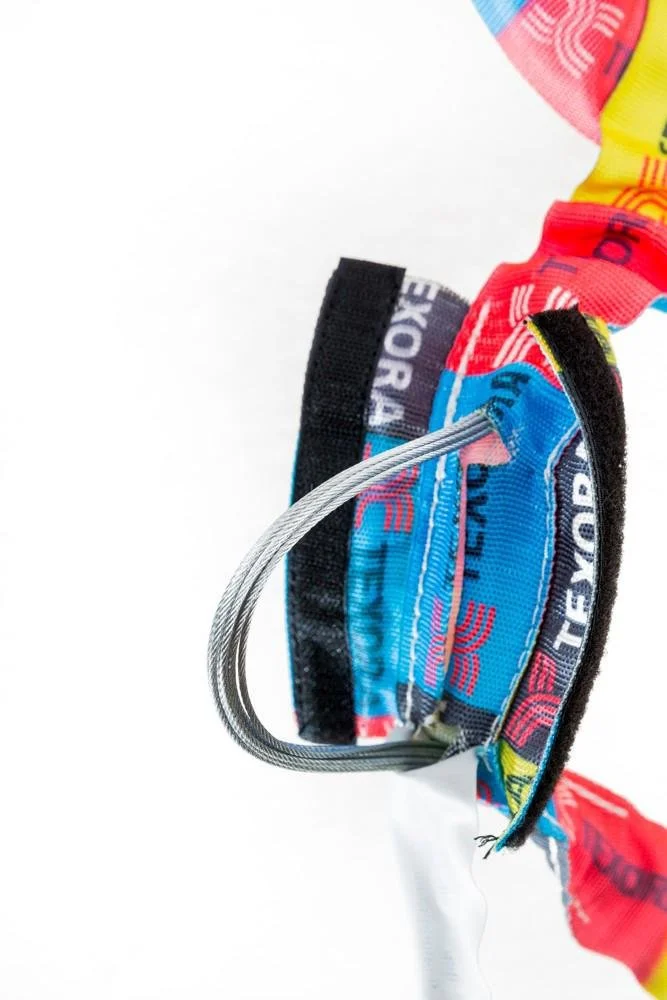
Core inspection: A core inspection hole with pocket allows full visual inspection of the internal wire-rope core so wear, corrosion, or broken wires can be detected without destroying the sling.
Typical applications: Temporary or permanent anchoring, fall-arrest anchor points, tie-off in confined-space work, rigging where higher abrasion and cut resistance are required.
Available lengths (metric → imperial)
0.5 m — 1.6 ft (approximately)
0.8 m — 2.6 ft (approximately)
1.0 m — 3.3 ft (approximately)
1.2 m — 3.9 ft (approximately)
1.5 m — 4.9 ft (approximately)
1.8 m — 5.9 ft (approximately)
2.0 m — 6.6 ft (approximately)
Notes and care
Inspect the core regularly through the inspection pocket for broken wires, corrosion, distortion, or any other signs of deterioration; remove from service if any damage is detected.
Avoid sharp-edge loading without appropriate edge protection.
Store dry and away from chemicals that could accelerate corrosion of steel components.
Use only as specified by applicable standards and in accordance with manufacturer instructions and safe rigging practices.
This anchoring device is constructed with a load-bearing core of wound steel wire ropes encased in an outer protective sheath that holds the ropes together and shields them from abrasion and mechanical damage. Compared with a standard textile sling, this design provides enhanced resistance to cuts, abrasion, and crushing, improving durability and service life in demanding work environments.
Key features
Core: Multiple wound steel wire ropes serve as the primary load-bearing element.
Protective sheath: Tough outer tube protects the core from mechanical damage and contamination.
Higher mechanical safety: The metallic core construction offers greater resistance to sharp edges and crushing than textile slings.
Break strength: Exceeds applicable standard requirements and provides a minimum breaking force greater than 50 kN (over 11,240 lbf).
Core inspection: A core inspection hole with pocket allows full visual inspection of the internal wire-rope core so wear, corrosion, or broken wires can be detected without destroying the sling.
Typical applications: Temporary or permanent anchoring, fall-arrest anchor points, tie-off in confined-space work, rigging where higher abrasion and cut resistance are required.
Available lengths (metric → imperial)
0.5 m — 1.6 ft (approximately)
0.8 m — 2.6 ft (approximately)
1.0 m — 3.3 ft (approximately)
1.2 m — 3.9 ft (approximately)
1.5 m — 4.9 ft (approximately)
1.8 m — 5.9 ft (approximately)
2.0 m — 6.6 ft (approximately)
Notes and care
Inspect the core regularly through the inspection pocket for broken wires, corrosion, distortion, or any other signs of deterioration; remove from service if any damage is detected.
Avoid sharp-edge loading without appropriate edge protection.
Store dry and away from chemicals that could accelerate corrosion of steel components.
Use only as specified by applicable standards and in accordance with manufacturer instructions and safe rigging practices.

Our crew has operated on the facades, rooftops, and glass curtains of South Florida's high-rises since 1986. In 2025, we opened the area's first physical rope access equipment store. No mountains — just buildings, ropes, and 40 years of urban experience. Skyhanger Store carries only what we trust on the job.
We've been working at heights for over four decades. We know what works — and what doesn't.
Every item in our inventory meets OSHA and ANSI safety standards. No compromises when lives are on the line.
Our staff are active rope access technicians. We give real-world advice on every purchase — not just product specs.
Located in Dania Beach, FL. Walk in, handle the equipment, and leave the same day fully geared up.
We exclusively carry brands we trust in the field — starting with EDELRID, a world leader in vertical safety systems.
Visit us in Dania Beach or shop online. Our team is ready to help you find the right equipment for your job.
New products, safety tips, and exclusive deals — straight to your inbox.
South Florida's first physical rope access equipment store. Opened 2025, backed by 40+ years of field experience. Professional gear for vertical professionals.





🛡️ All items are OSHA & ANSI certified · 📍 In-store pickup available in Dania Beach, FL · 📞 Questions? Call (954) 228-5661
Professional rope access and safety equipment from EDELRID and NLG. OSHA & ANSI certified. Ships from Dania Beach, FL.